
Recently, numerous hypotheses have been put forward to find natural or preventive cures to defeat the current ailment, specifically the one caused by Covid-19.
Among the many proposed remedies, one in particular has garnered widespread interest: Vitamin C supplementation. But is it true? Let's find out together.
What is SARS-CoV-2?
It is a new strain of coronavirus that had never been previously identified in humans before being reported in Wuhan, China, in December 2019.
However, the coronavirus family is very broad, and these viruses are known to cause illnesses ranging from the common cold to more serious diseases such as Middle East Respiratory Syndrome (MERS) and Severe Acute Respiratory Syndrome (SARS). Currently, a new pathological form known as Covid-19 is under study.
What is Vitamin C?
Let’s start by understanding the role of this essential nutrient, also known as ascorbic acid.
Vitamin C undoubtedly has numerous beneficial functions.
- It is a powerful antioxidant and helps fight inflammation by reducing the presence of free radicals;
- It is involved in immune functions, stimulating the activity of specific immune cells such as: phagocytes, which are responsible for phagocytosing (engulfing) particles that are foreign to our body and potentially harmful, and lymphocytes, a type of cell that increases circulating antibodies;
- It is involved in iron absorption;
- It participates in collagen synthesis, helping the skin perform its protective barrier function;
- It promotes wound healing.
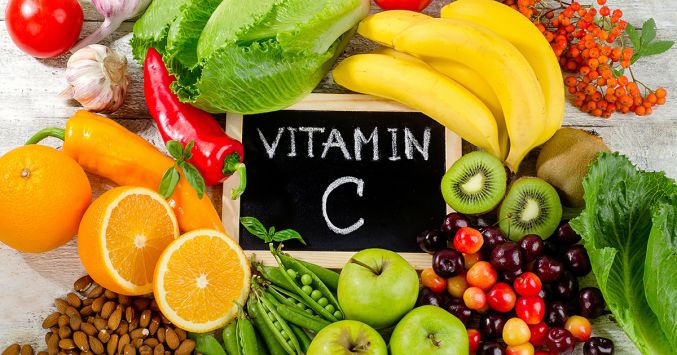
Meeting daily requirements through diet alone is very simple, as it is found in numerous fruits and vegetables, such as: lemons, kiwis, oranges, strawberries, bell peppers, arugula, broccoli, and lettuce.
Some scientific studies have observed that Vitamin C can be a valuable ally during the healing phase of a common cold, also helping to reduce symptoms.
Vitamin C against the coronavirus
The debate over the use of Vitamin C for the treatment of Covid-19 stems from a scientific publication in the Chinese Journal of Infection Diseases, and it appears that the Shanghai Medical Association has approved the use of high-dose Vitamin C as a treatment for hospitalized COVID-19 patients.
Chinese researchers have also launched a clinical trial to further study the efficacy of Vitamin C in people hospitalized with COVID-19.
However, it is important to note that Vitamin C is not yet a standard part of the treatment plan for COVID-19 because scientific evidence is still lacking, and currently, no analysis suggests that high doses of oral Vitamin C supplements can help with the disease.
In conclusion, Vitamin C may help reduce the duration and severity of colds caused by other viruses, but this does not guarantee it will have the same effect on the coronavirus that causes COVID-19.
Furthermore, ascorbic acid is a water-soluble vitamin, meaning it dissolves in water; this means that excess amounts are not stored in the body but are eliminated through urine. Therefore, it is useless to take high doses of Vitamin C orally as a common dietary supplement.
Although there is currently no cure for COVID-19, preventive measures such as social distancing and proper hygiene can help protect you from developing the disease.
Carr, Maggini. "Vitamin C and Immune Function." Nutrients. 2017
https://ods.od.nih.gov/factsheets/VitaminC-HealthProfessional/
Rogovskii. "The Linkage Between Inflammation and Immune Tolerance: Interfering with Inflammation in Cancer." Curr Cancer Drug Targets. 2017
Hemilä H, Chalker E. "Vitamin C for preventing and treating the common cold." Cochrane Database Syst Rev. 2013