
Lactose intolerance, as we have already seen, is a condition linked to a deficiency of an enzyme, lactase, which allows for the digestion of lactose. This is the sugar in milk, present in various foods including, precisely, all dairy products.
Once you have tested for intolerance, for example with the breath test, it is advisable to follow a precise diet, such as the one we indicate here.
But alas, among the foods to avoid, we also find a very common dairy product: mozzarella.

How can one give up a Margherita pizza, perhaps with Mozzarella di Bufala Campana?
A small indulgence can allow us to consume it anyway by taking a good lactase supplement.
Today, however, we are quite lucky in the market.
On the shelves of many supermarkets, in fact, we can find lactose-free mozzarella, which will allow us to prepare, for example, delicious mozzarelle in carrozza, or why not, even bake mozzarella in a timbale with eggs and vegetables such as zucchini and eggplant.
But does buffalo mozzarella contain lactose?
That this product contains lactose is undeniable. But there is news. The Consorzio Tutela Mozzarella di Bufala Campana states on its website:
“Mozzarella di Bufala Campana is an easily digestible cheese with a reduced lactose content”, although the specific amount is not mentioned, therefore individual tolerability should be tested.
Nutritional values of lactose-free mozzarella
Let's examine the label values of a lactose-free mozzarella and one with lactose. Obviously, we are taking into consideration a packaged dairy product rather than one purchased at a dairy shop, both for convenience and to provide you with easily verifiable information.
| 100 g of product | Lactose-free mozzarella | Mozzarella with lactose |
| Calories | 222 Kcal | 238 Kcal |
| Carbohydrates | 0.2 g | 2 g |
| Proteins | 17 g | 17 g |
| Fats | 17 g | 18 g |
As we can note, what is clearly different is the quantity of carbohydrates. This is precisely due to the lack of lactose (which, being a sugar, is included in the carbohydrates) which, through particular processes, is pre-digested. This should, therefore, also affect the caloric content. Both are a good source of protein and have a decent amount of fat.
It is important to specify that the mozzarella we have considered has a lactose content of less than 0.01%. It is very important to always check the lactose content on the label.
Products known as “delactosed”, i.e., those that have been stripped of lactose (meaning the sugar has been “digested” through particular procedures), can vary greatly.
The lactose content, in fact, can be:
- Less than 1%
- Less than 0.1%
- Less than 0.01%
Based on your degree of tolerance, you can consume all three types, or only two, or only the last one. Always check the label for the presence of lactose, therefore, not only for mozzarella but for all products, such as ricotta as well.
In case of doubt, or if you want to treat yourself to a real mozzarella with lactose, remember that you can use a lactase enzyme supplement like Lactosolution.
We suggest a tasty recipe to make with lactose-free mozzarella.
Recipe with lactose-free mozzarella: zucchini timbale
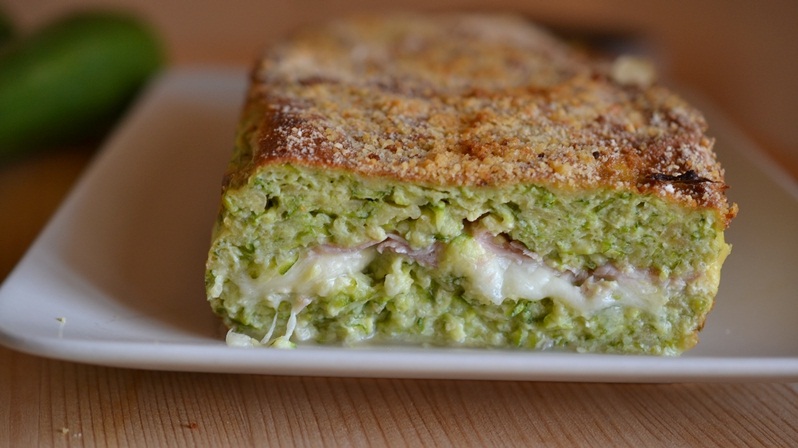
An idea for the usual dinner? A tasty timbale that guarantees a good supply of all three macronutrients in the diet: carbohydrates, proteins, and fats.
Ingredients for 4 people:
- Potato 300 g
- Tomato 200 g
- Ham 100 g
- Zucchini 200 g
- Eggs 3
- Grana Padano 2 tablespoons
- Extra virgin olive oil to taste
- Salt to taste
Procedure:
- Beat the eggs with the grated cheese. Boil the potatoes and cut them into cubes. Sauté the zucchini in a pan with a drizzle of extra virgin olive oil and combine them with all the ingredients.
- Preheat the oven to 200°C and bake for about 20 minutes in a baking pan lined with parchment paper.
Sources: