
Herbs and spices, such as turmeric, are particularly used to flavor foods and drinks.
Beyond their ability as food flavorings and preservatives, spices have been used for thousands of years, especially in traditional Eastern medicine, for the treatment of various diseases.
Among the beneficial properties we can list:
- antioxidant,
- anti-inflammatory,
- analgesic,
- hypoglycemic,
- hypolipidemic.
Other benefits of spices are represented by protection against cardiovascular and neurodegenerative diseases, cancer, and type 2 diabetes.
Most of the health benefits of spices are mediated by their ability to prevent the formation of free radicals, repair oxidative damage, and eliminate damaged molecules—in short, by their antioxidant capacity.
This property is related to the presence of a wide variety of chemical compounds. These compounds are synthesized by plants for the purpose of attracting beneficial organisms, repelling harmful ones, resisting pathogens, acting as photoprotectors, and responding to environmental changes.
Such compounds are products of secondary metabolism in plants, mainly belonging to classes such as terpenes and their derivatives, phenylpropanoids, isothiocyanates, sulfur compounds, and are often present as glucosides.
Turmeric
Among traditional spices, turmeric and ginger have recently been gaining great attention worldwide, both for their sensory characteristics and for their benefits to human health. Turmeric can be purchased in herbal shops as a tablet, powder, or root.
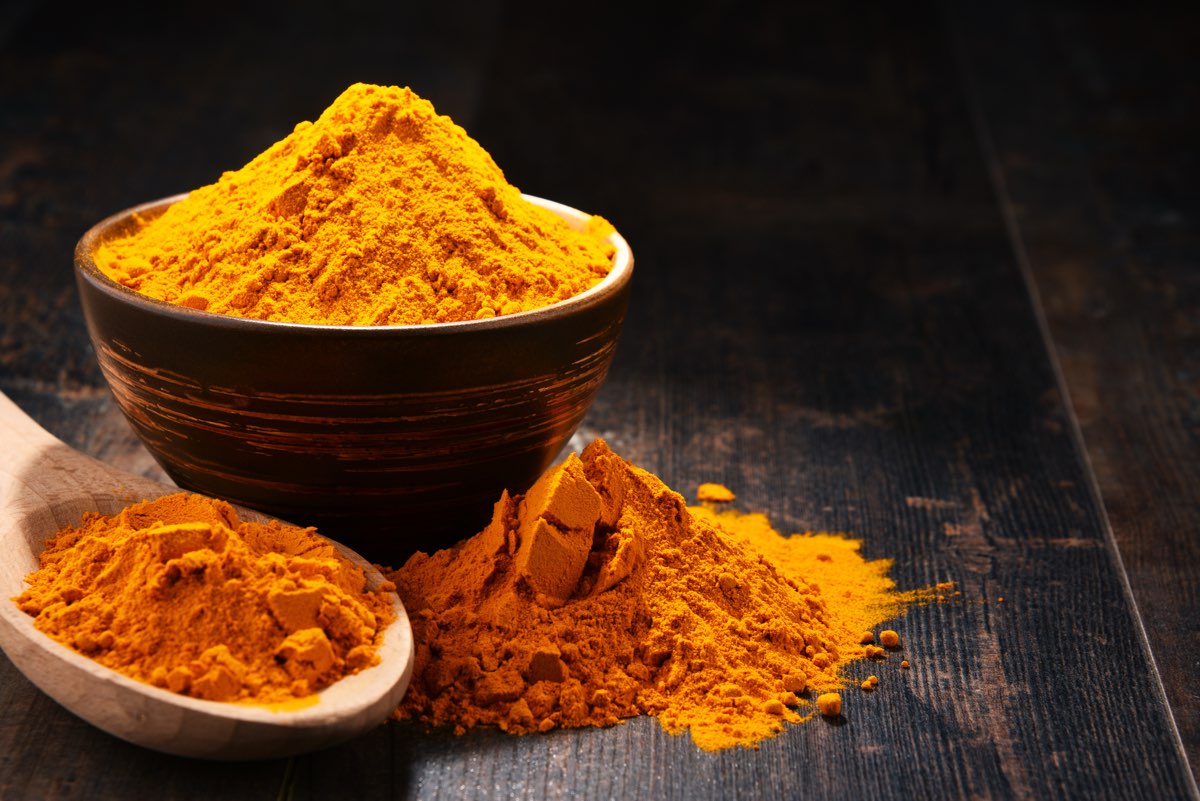
Turmeric (Curcuma longa L.), one of the spices used in cooking, is a plant belonging to the Zingiberaceae family, grown mainly in India, Bangladesh, China, Cambodia, Malaysia, Thailand, the Philippines, and Indonesia.
The main bioactive compounds of turmeric are three curcuminoids, whose biological activities include antioxidant, antiprotozoal, antimicrobial, antitumor, and anti-inflammatory actions.
Curcumin is the main active ingredient in turmeric. It has powerful anti-inflammatory effects and is a very strong antioxidant. However, the curcumin content in turmeric is not that high.
Most studies on this spice use turmeric extracts that primarily contain curcumin at dosages generally exceeding 1 gram per day.
It would be very difficult to reach these levels using only the spice added to food.
In fact, curcumin is poorly absorbed, and its medicinal properties derived from using turmeric cannot be exploited due to poor bioavailability caused by rapid metabolism in the liver and intestinal wall.
Help can be provided by consuming black pepper together with it, which contains piperine, a natural substance that increases the absorption of curcumin. Precisely for this reason, turmeric and piperine supplements are available on the market.
Curcumin is also fat-soluble, so it might be a good idea to take it with a meal rich in fat.
The properties of turmeric
The beneficial actions that turmeric exerts on our body are numerous. We have already anticipated them in general terms, but now we will analyze them better:
-
Turmeric has anti-inflammatory properties.
Although short-term acute inflammation is beneficial because it helps our body react to the action of pathogens, it can become a serious problem when it becomes chronic. It could, in fact, play an important role in almost all chronic diseases. -
Turmeric has antioxidant action.
Antioxidants are useful in protecting the body from free radicals that cause oxidative damage, which is one of the underlying causes of aging and many diseases. Curcumin has powerful antioxidant effects, not only by neutralizing free radicals but also by stimulating the body's antioxidant enzymes. - Turmeric helps brain function, preventing degenerative processes.
- Turmeric has a preventive action against cancer, particularly those affecting the gastrointestinal system, such as colorectal cancer.
- Turmeric has antidepressant effects. A study conducted on 60 people with depression showed that curcumin is effective in alleviating its symptoms.
Turmeric and irritable bowel
Participants in a scientific study conducted in 2004 took one turmeric extract tablet every day for eight weeks. Following the treatment, they reported less abdominal pain and decreased discomfort, as well as an increase in quality of life. However, researchers stated that placebo-controlled research is needed to further establish these results.

But does turmeric really work?
We can say that it certainly has beneficial effects proven by numerous scientific studies, but using turmeric for weight loss is not appropriate, and it diminishes its real and important properties.
Where to use turmeric?
It can be added to meals, such as risotto or vegetables, but also to drinks like milk. It is also very pleasant added to an herbal tea, prepared with water and lemon, perhaps with a teaspoon of honey.
Contraindications
Its use is contraindicated in cases of gallstones or any obstructive biliary tract disease. Please note: before taking a turmeric-based dietary supplement, which can be purchased at an herbal shop, it is best to consult a nutritionist for information regarding dosage.
Bibliography
- Baiano. (2018) “Antioxidant Properties of Traditional Spices”. Acta Scientific Nutritional Health
- Shoba. (1998) “Influence of piperine on the pharmacokinetics of curcumin in animals and human volunteers.” Planta Med
- Carroll et al. (2011) “Phase IIa clinical trial of curcumin for the prevention of colorectal neoplasia.” Cancer Prev Res
- Ying Xu et al. (2006) “Curcumin reverses the effects of chronic stress on behavior, the HPA axis, BDNF expression and phosphorylation of CREB”. Brain Research
- Shrinivas K. Kulkarni et al. (2008) “Antidepressant activity of curcumin: involvement of serotonin and dopamine system”. Psychopharmacology
- Rafe Bundy et al. (2005) “Turmeric Extract May Improve Irritable Bowel Syndrome Symptomology in Otherwise Healthy Adults: A Pilot Study”. The Journal of Alternative and Complementary Medicine
- Betül Kocaadam et al. (2017) “Curcumin, an active component of turmeric (Curcuma longa), and its effects on health”. Critical Reviews in Food Science and Nutrition